
In 3D printing, filament is the primary material used to create printed objects. It is fed into the printer, heated to a controlled temperature, and deposited layer by layer to form a finished part. Filament selection directly affects print quality, mechanical strength, durability, and overall printing success.
In this article, we are going to provide a comprehensive guide to understanding filament in 3D printing, explaining how it works, why material quality matters, and how to choose the right filament for different printers and applications.
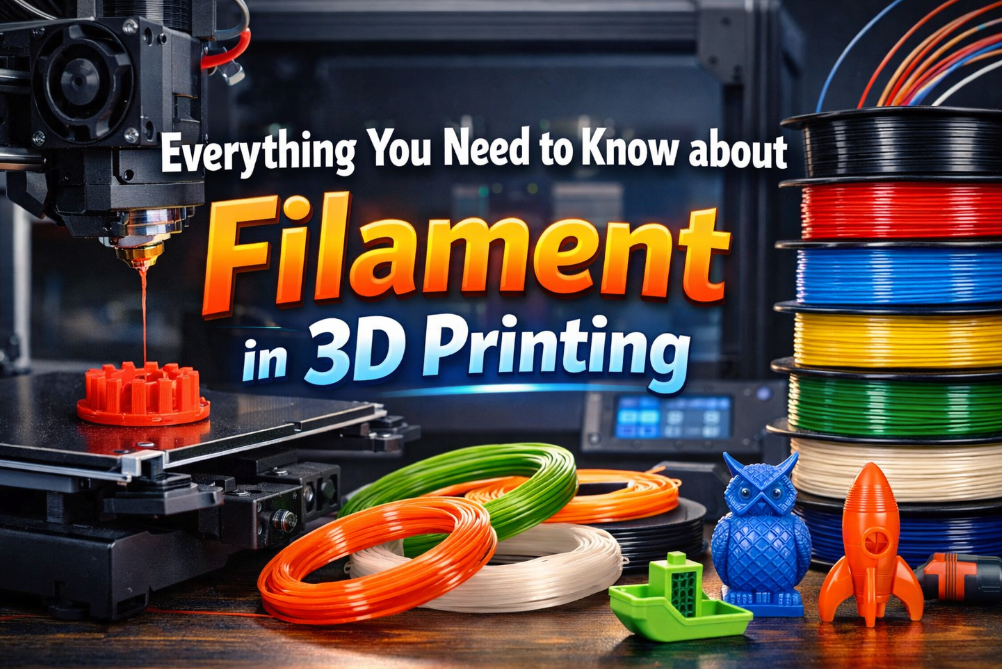
Define What a Filament is in 3D Printing
So, what is filament in 3d printing? Filaments are 3d printer consumables used by most desktop and industrial FDM and FFF 3D printers.
It is supplied as a continuous solid strand, typically wound onto a spool, and serves as the raw input from which printed parts are formed.
In FDM and FFF 3D printers, filament is mechanically fed from the spool into the extruder system. The extruder applies controlled force to push the filament into a heated nozzle, where it softens and reaches a printable state. Once molten, the material is extruded through the nozzle and precisely deposited onto the build surface following instructions from the slicing software.
Common Filament Diameters (1.75 mm vs. 2.85 mm)
Filament is manufactured in standardized diameters to ensure compatibility with printer hardware. The two most common sizes are 1.75 mm and 2.85 mm, sometimes labeled as 3.00 mm.
1.75 mm filament in 3D printing is widely used across modern desktop printers. Its thinner profile allows for finer extrusion control, smoother retraction, and compatibility with compact extruder designs. On the other hand, 2.85 mm filament is thicker and more rigid. It is commonly used in printers designed around Bowden-style extrusion systems, where stiffness helps reduce compression over longer feed paths. Some users also favor it for applications requiring higher material flow rates.
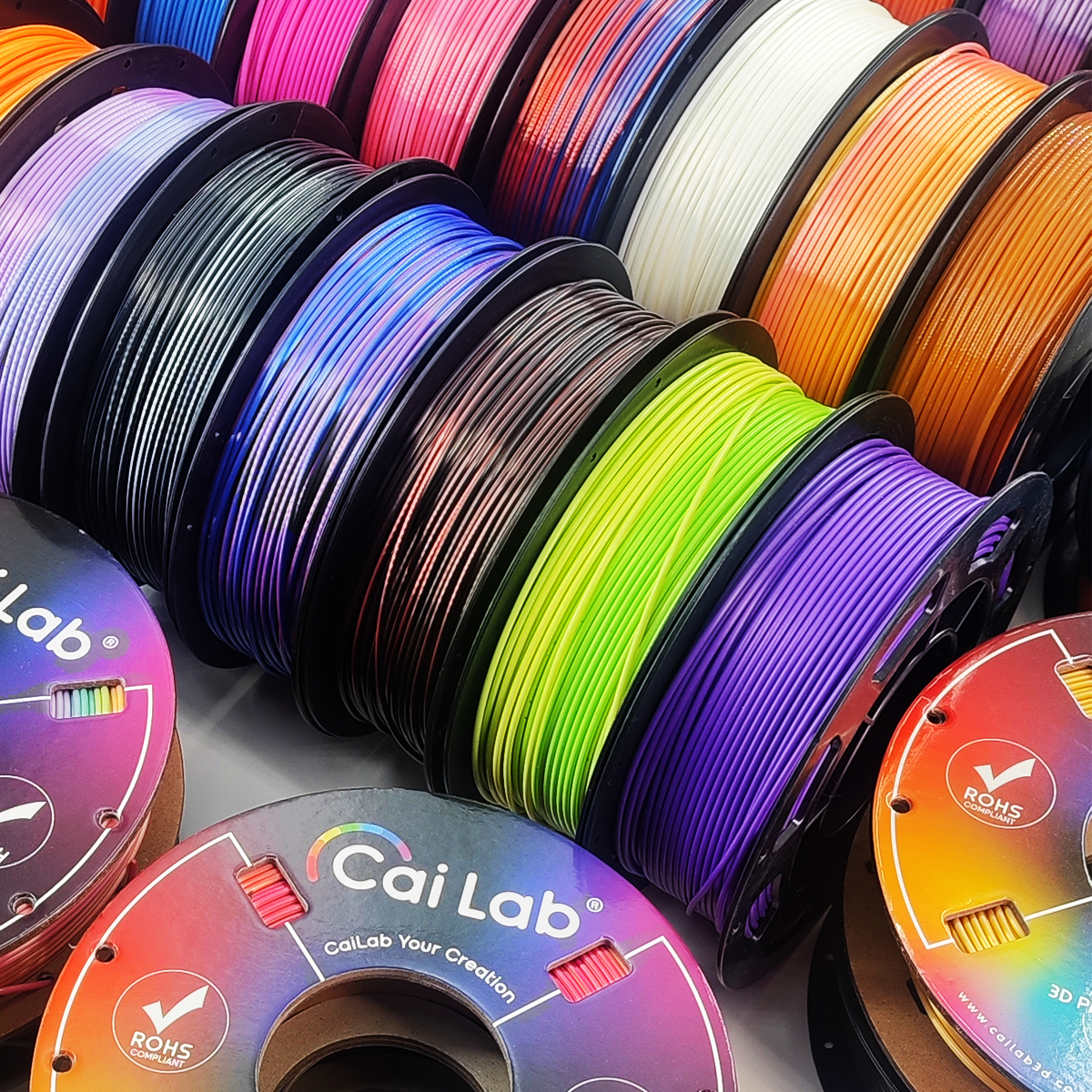
Ways that Filament Quality Influences Extrusion Consistency
Extrusion consistency depends on how evenly the filament in 3D printing melts and flows through the nozzle during printing.
High-quality filament maintains a uniform diameter along its entire length. This consistency allows the extruder to deliver predictable amounts of material, resulting in smooth layers and accurate dimensions. Filament with poor diameter control causes fluctuations in extrusion, leading to overfilled sections, gaps, or weak layer bonding.
Material purity also plays a role in determining extrusion consistency. Contaminants, uneven additives, or poorly blended pigments can disrupt melting behavior and restrict flow through the nozzle. Moisture absorption further complicates extrusion, as trapped water vapor expands during heating and creates bubbles or surface defects.
Key Indicators of Performance in 3D Printing Filament
Several key indicators determine how a filament behaves during printing and how a finished part performs in use.
Melting and Printing Temperature
This defines how smoothly the filament in 3D printing softens and flows through the nozzle. A stable temperature range supports consistent extrusion and strong layer adhesion.
Strength and Durability
Strength indicates load-bearing capability, while durability reflects resistance to impact and repeated stress. Both depend on material composition and printing consistency.
Flexibility and Toughness
Flexibility describes how much a filament can bend, while toughness measures its ability to absorb force without cracking. These properties are critical for parts exposed to movement or impact.
Printing Stability and Consistency
Stable filaments maintain uniform diameter and predictable flow, reducing print defects and improving repeatability across multiple prints.
Key Characteristics of Various Types of Filaments in 3D Printing and Comparison
Filament in 3D printing is designed with different material properties to support a wide range of applications. Key characteristics of common 3d printing filament types include:
- PLA: Prints at lower temperatures, offers strong layer adhesion, produces smooth surface finishes, and is best suited for visual models and general prototyping. Heat resistance is limited.
- ABS: Requires higher printing temperatures, delivers improved toughness and heat resistance, and is suitable for functional parts. Controlled printing conditions are often necessary to prevent warping.
- PETG: Combines strength and flexibility, resists moisture and chemicals, and prints with less warping than ABS.
- TPU: Highly flexible and elastic, making it ideal for parts that need to bend, compress, or absorb impact.
- Nylon: Known for durability and wear resistance, but sensitive to moisture and more demanding to print.
Introduce CaiLab 3D Printing Filament: Why Choose Us?
In additive manufacturing, filament quality shapes everything—from printing efficiency and reliability to the performance of the final part. Factors like diameter consistency, material stability, moisture resistance, and thermal behavior all play a critical role in extrusion accuracy, surface finish, and mechanical strength. When these elements are right, prints run smoother, failures drop, and overall production costs stay under control.
At CaiLab, quality isn’t an afterthought—it’s the foundation of everything we do. With an ISO 9001–certified manufacturing facility and tightly controlled production processes, we manage every step of the journey, from raw material selection to final extrusion. This disciplined approach delivers dependable consistency, repeatable results, and reliable performance at scale.
Our filament portfolio ranges from advanced PLA+ formulations to Silk and gradient PLA for premium visual appeal, as well as engineering-grade PETG and specialized materials for functional and design-focused applications. Backed by precision manufacturing, thorough material validation, and protective packaging, CaiLab filaments help reduce print failures, deliver predictable outcomes, and perform confidently across a wide range of printers and use cases.
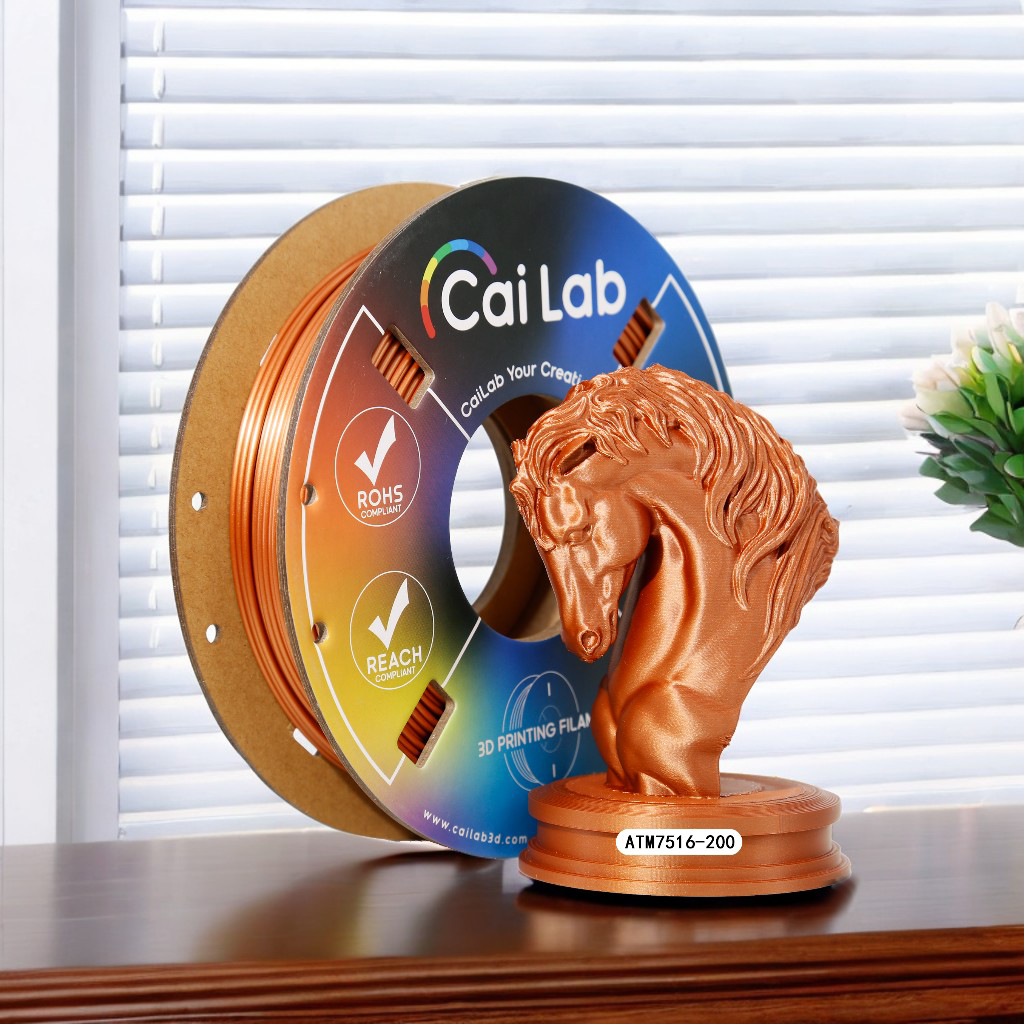
Tips to Choose the Right Filament in the CaiLab Online Store
At CaiLab Online Store, we offer a wide selection of filaments for your 3D printing needs! Yet many, especially novices in 3D printing, are perplexed about how to choose the right filament for their project.
Here are some considerations to help narrow the options and improve print results!
-
Based on Your Printer and Skill Level
Begin by reviewing your printer’s temperature range, extrusion system, and enclosure setup. Standard PLA and PLA-based variants are well-suited for entry-level printers and users who prioritize stable, low-maintenance printing.
Printers with higher temperature capability and better thermal control can take advantage of materials such as PETG, carbon-fiber–reinforced filaments, or specialty blends that demand more precise settings.
-
Based on Application Scenarios
Match filament properties to how the printed part will be used. Decorative models, display pieces, and artistic prints benefit from filaments designed for surface finish and color effects, such as silk, gradient, or specialty visual materials.
Functional parts, prototypes, and components exposed to stress or heat perform better when printed with stronger, more heat-resistant materials such as PETG or reinforced PLA formulations.
-
Based on Cost and Performance Balance
When evaluating 3d printer filament price, it is important to balance material cost with performance requirements.
General-purpose filaments offer reliable results for everyday printing at a lower cost, while premium or specialty filaments are best reserved for projects where enhanced strength, visual impact, or material performance is essential.
Conclusion
Filament plays a defining role in 3D printing performance, influencing print quality, strength, durability, and reliability. Understanding filament properties and material differences allows users to choose options that match their printer capabilities and application needs. With carefully engineered materials and consistent manufacturing standards, CaiLab filaments deliver reliable printing results across all types of projects.
Try CaiLab’s filament in 3D printing today!
0 comments